



Key takeaways
- Relying on a single national carrier is one of the biggest risks in ecommerce logistics. Diversifying across small and regional carriers gives brands more flexibility, better cost predictability, and a critical backup when disruptions hit.
- Small carriers aren't just a cheaper alternative. They often outperform the big three in agility, customer service, and last-mile delivery, giving growing brands a competitive advantage rather than just a contingency plan.
- Managing multiple carriers doesn't have to be complicated. Independent platforms like Parsel help ecommerce brands compare rates, manage carriers, and streamline fulfillment workflows from one place.
After speaking with hundreds of Saltbox members from several of our locations, one thing is clear amongst ecommerce brands — shipping no longer revolves around the big three carriers: UPS, USPS, and FedEx. Instead, many brands are turning their attention to small shipping carriers that focus on adaptability, speed, and customer service.
Now, this doesn’t necessarily mean all ecommerce companies should turn their back on large logistics providers, but it does mean that a quiet revolution is happening in the industry. Small shipping carriers are filling a void in the marketplace by offering faster responses and sharper communication, making them ideal partners for ecommerce brands.
In the following sections, we’ll explore why small shipping carriers are gaining significant ground on their corporate counterparts and why they're a great fit for online sellers.

Pro tip: Preparing for unexpected spikes can help fortify your fulfillment strategy
Unexpected surges in orders can be great for revenue but cause fulfillment headaches. The following checklist guides you through five core operational areas to ensure your logistics, inventory, and fulfillment can scale quickly and efficiently.
Get the checklistWhy are small shipping carriers gaining ground?
The biggest reason small shipping carriers are gaining ground on organizations like UPS and FedEx comes down to agility. Unlike large carriers, these regional carriers often have the ability to adapt faster to:
- Local demand
- Route changes
- Delivery windows
Another reason small shipping carriers are growing in popularity is their cost structure. Typically, peak season means surcharges for ecommerce brands, especially those using UPS, FedEx, and USPS. However, regional carriers often operate without the peak season surcharges, offering greater cost predictability.
In the past, agility was nice to have, though many ecommerce brands still opted for a large, well-known carrier rather than small operations. But with increased consumer demand and supply chain constraints during peak season, a single-carrier approach no longer works.
To thrive in today’s marketplace, online sellers need to diversify their logistics strategy by relying on smaller, regional carriers to reduce costs and improve delivery times.
What do small carriers actually do better than the big three?
The things that small carriers do better than the big three revolve around agility, customer service, and cost competitiveness. In fact, regional carriers can be a competitive advantage for online sellers looking to improve their logistics strategy. Here’s how small, regional carriers stack up against national carriers.
How are ecommerce brands using small carriers successfully?

Ecommerce companies are successfully using small carriers in two ways: for risk management through diversification and for cost forecasting during peak season.
For many new or smaller ecommerce brands, using a service like UPS, USPS, or FedEx might seem like the safest option. But relying on a single carrier can leave your company at the mercy of the logistics provider. The big three often experience significant delays during peak season, which can lead to missed deliveries and bottlenecks for your business.
One way to mitigate these risks is to diversify your logistics network by adding small shipping carriers. These regional partners deliver more reliably and experience fewer issues during peak season, making them a dependable option for holiday shipping.
Small shipping carriers also make it easier for online sellers to forecast costs better since there are often little to no surcharges. Transparent pricing also makes it easier on margins as brands run promotions during peak season.
Although regional carriers offer several benefits for ecommerce companies, managing multiple carriers and comparing rates can be challenging, which is why many online sellers rely on independent shipping management platforms like Parsel.
How do Saltbox and Parsel support modern shipping strategies?
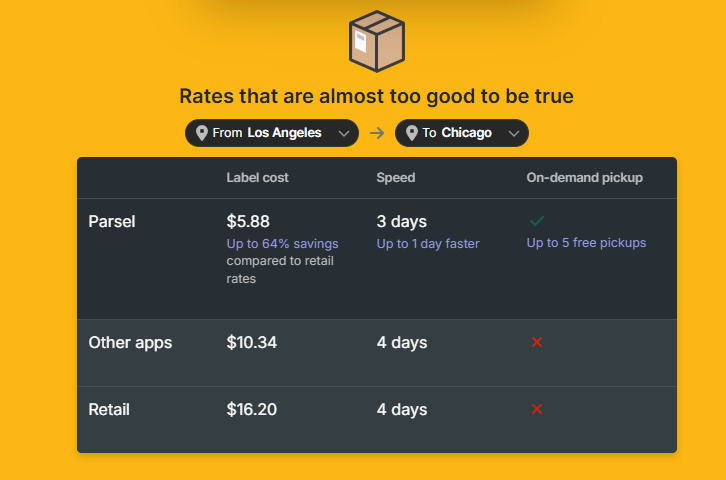
The partnership of Saltbox and Parsel supports modern shipping strategies by offering a streamlined fulfillment solution. Saltbox acts as the physical environment for online sellers, providing strategically located warehousing and logistics support that positions brands closer to their customers. Parsel is a separate shipping management platform that helps brands manage carriers, compare rates, and optimize fulfillment workflows.
Together, they give ecommerce brands a flexible alternative to national carriers and traditional 3PLs, with the freedom to build a fulfillment model that fits how their business actually operates. For Saltbox members, access to Parsel means having a trusted shipping management tool already built into their logistics ecosystem, without needing to source and vet an additional platform independently.
What does the road ahead look like for small shipping carriers?
As ecommerce logistics evolve, small shipping carriers will continue changing the way ecommerce brands think about their fulfillment strategies. More online sellers are realizing that the future success of their fulfillment strategy won’t hinge on a single carrier, but a diversified network of carriers.
The introduction of new technology is also tipping the scales in favor of small shipping carriers who are quicker to adopt tools that give ecommerce brands better visibility and predictive logistics. Ultimately, the future of fulfillment will center around flexibility, whether that’s through regional carriers or co-warehousing solutions like Saltbox.
If you want to learn more about the Parsel platform or are looking for a flexible warehousing solution to streamline your fulfillment model, book a tour with our team today.
Frequently asked questions
Small shipping carriers are regional or independent logistics providers that operate outside of the big three national carriers. They typically focus on specific geographic markets and offer more flexible, cost-competitive delivery options for ecommerce brands.
Small carriers offer advantages that national carriers often can't match, including more flexible pickup windows, fewer peak season surcharges, and more direct customer service. For growing brands, they represent a practical way to diversify logistics and reduce dependence on a single provider.
Many regional carriers have invested heavily in modern tracking technology and local delivery networks, making them a dependable option for ecommerce fulfillment. Brands that diversify across multiple carriers often report better overall delivery performance than those relying solely on national providers.
Carrier diversification means distributing your shipments across multiple logistics providers rather than relying on a single carrier. It reduces risk during peak season disruptions, improves cost predictability, and gives brands more flexibility to adapt when delays or surcharges occur.
Parsel is an independent shipping management platform and Saltbox partner that helps ecommerce brands manage multiple carriers, compare rates, and streamline fulfillment workflows from one place. It is not proprietary Saltbox software but rather a standalone platform accessible to Saltbox members.
Saltbox provides strategically located warehousing and logistics support that positions brands closer to their customers, making it easier to execute a diversified carrier strategy. Saltbox members also have access to Parsel, giving them the tools to manage carrier complexity without needing to source additional platforms independently.
For Her
For Him
For Pets
For Anyone





Related posts
Learn from businesses improving their operational efficiency. Explore how Saltbox’s expert support and flexible spaces drive their growth.


2026 peak season shipping surcharges: what FedEx, UPS, USPS, and Amazon are charging
Additional handling went up about 6%. The fee on every single order went up 25%. Here’s the full 2026 surcharge picture, and what it costs you per order.
10 best 3PL companies in Atlanta, GA (2026)
Ten Atlanta 3PL providers compared on buildings and certifications, plus the case for keeping fulfillment in a suite you control.
10 best 3PL companies in Tempe, AZ (2026)
Ten 3PL providers serving Tempe, what each one is built to handle, and the case for keeping your pallets somewhere you can walk in.
Related terms
Learn from businesses improving their operational efficiency. Explore how Saltbox’s expert support and flexible spaces drive their growth.